Health and Safety Policy for Landscaping Kilburn
 This health and safety policy sets out the standards required for all landscaping activities carried out by Landscaping Kilburn. It applies to planning, site preparation, planting, lawn care, hard landscaping, pruning, clearing, and the use of tools, machinery, and materials. Our aim is to protect employees, contractors, clients, visitors, and members of the public by creating a safe working environment and promoting responsible work practices. A safe landscape service depends on awareness, training, supervision, and careful control of everyday risks.
We are committed to identifying hazards early and putting controls in place before work begins. This includes assessing uneven ground, moving vehicles, sharp tools, manual handling tasks, flying debris, noise, dust, and exposure to weather conditions. The company expects everyone involved in landscaping services to follow safe systems of work, use equipment correctly, and report concerns promptly. Safety is considered an essential part of quality workmanship, not an optional extra.
All staff must take reasonable care of their own health and safety and that of others who may be affected by their actions. This means wearing suitable protective equipment, working within competence, and avoiding any activity that may create unnecessary risk. Supervisors will make sure instructions are clear, tasks are properly planned, and work areas are monitored throughout the job. Good communication is central to effective landscaping safety.
Risk assessments will be completed before work starts and reviewed whenever conditions change. Particular attention will be given to tasks involving hedge cutting, chainsaw use, lifting heavy materials, handling fertilisers, working near water, and operating powered machinery. Controls may include barrier use, safe access routes, tool checks, and limits on who may enter the work area. Where needed, additional precautions will be introduced to reduce exposure to hazards.
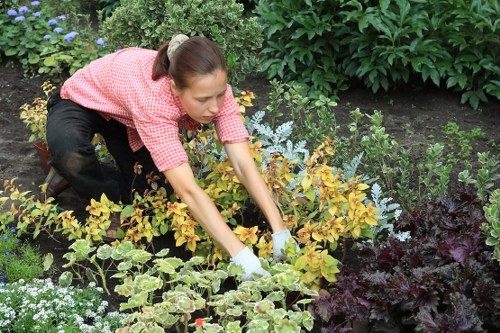
Personal protective equipment must be worn when required and kept in good condition. Depending on the task, this may include gloves, safety boots, eye protection, hearing protection, helmets, high-visibility clothing, and respiratory protection. PPE will only be used as part of a wider approach that also includes training, maintenance, and safe working methods. Staff must not bypass protection or use damaged equipment.
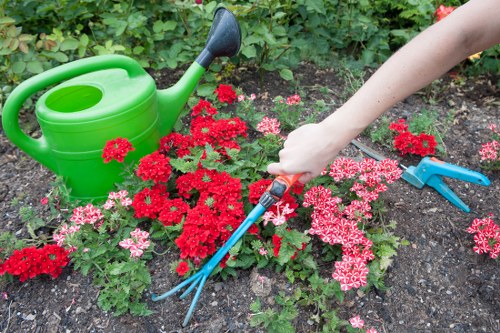
 Tools and machinery are to be inspected before use and stored safely after work. Defective items must be taken out of service immediately and reported for repair or replacement. Fuel, oils, and chemicals must be handled carefully to prevent spills, fire, or environmental damage. Operators of powered equipment must be trained and authorised, and all landscaping equipment should be used in line with manufacturer instructions and company procedures.
 Manual handling presents a significant risk in gardening and grounds work, so loads must be assessed before lifting, carrying, or moving. Where possible, heavy items should be split into smaller loads, transported using suitable aids, or moved by more than one person. Staff must use correct posture and avoid twisting, overreaching, or rushing. Safe handling protects both short-term comfort and long-term health.
Weather conditions must also be considered. Landscaping work may involve heat, cold, rain, wind, or prolonged sun exposure. Breaks, hydration, warm clothing, sunscreen, and schedule adjustments may be necessary to keep work safe. During poor weather or reduced visibility, tasks may need to be paused or rescheduled. Responsible landscaping practice means recognising when conditions are no longer suitable for safe work.
Training and supervision are key parts of this policy. New workers will receive instruction on hazards, equipment use, emergency arrangements, and site standards before being allowed to work independently. Refresher training will be provided when processes change or when risks indicate additional support is needed. Supervisors will check that safe methods are being followed and will intervene if unsafe behaviour is observed.
Emergency arrangements will be maintained for incidents such as injury, fire, electric shock, chemical exposure, or severe weather. First aid supplies must be available, and workers should know how to raise an alarm and seek assistance quickly. Any accident, near miss, or unsafe condition must be reported and recorded so that lessons can be learned and future harm prevented. Prompt reporting supports continuous improvement in landscaping health and safety.
Housekeeping is essential on every site. Tools, offcuts, packaging, and waste must be removed or stored neatly to prevent slips, trips, and falls. Access points, paths, and work zones should be kept as clear as practicable, especially where clients, neighbours, or pedestrians may be nearby. When waste is generated, it must be segregated and disposed of responsibly in line with safe and lawful practices.
 Environmental care is also part of safety management. The use of chemicals, fuel, and water must be controlled to prevent contamination or harm to plants, wildlife, and surfaces. Dust, noise, and vibration should be minimised where possible through suitable equipment selection and working methods. Landscaping Kilburn expects everyone to act with care, professionalism, and respect for the surroundings at all times.
The company will review this policy regularly to ensure it remains effective, practical, and current. Reviews may follow changes in work activities, equipment, legislation, or incident trends. Improvements will be made where needed so that standards continue to support a safe and efficient service. A strong health and safety culture depends on ongoing commitment from management and workers alike.
 All personnel are expected to support this policy by following instructions, using safe methods, and contributing to a positive working environment. By maintaining alertness, respect, and accountability, Landscaping Kilburn aims to deliver reliable work while protecting people, property, and the environment. Safety is a shared responsibility, and every task should be carried out with care from start to finish.